Psalm 121
Genesis 12:1-4a
John 3:1-17
“Look Up!”
Psalm 121 is one of my favourite psalms. It’s a passage that I often turn to when life is stressful, when I’m feeling worried or afraid. And it’s one of the psalms that I often share with people that I am caring for in times of distress.
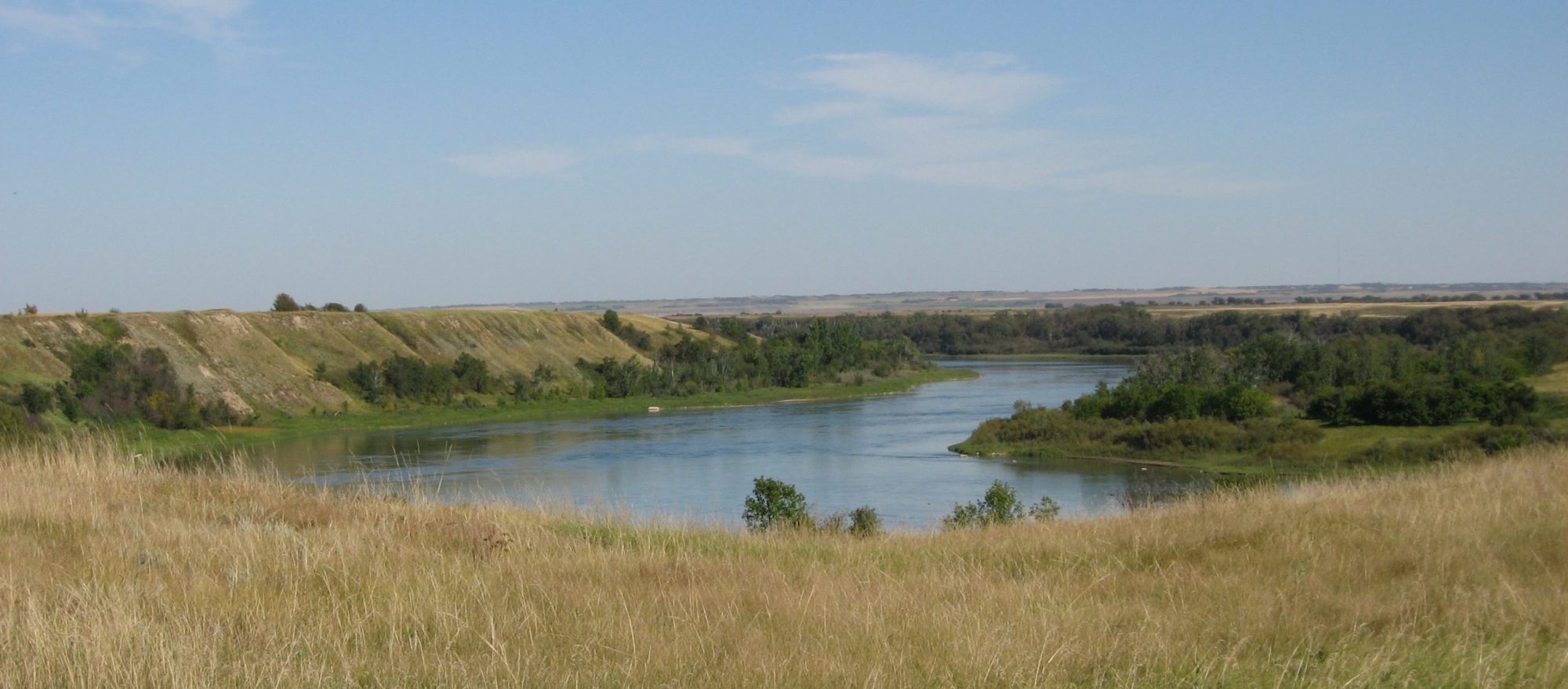
But I realized this week that I may have been reading it wrong, or at least mis-interpreting the first line. It begins, “I lift my eyes to the hills – from where will my help come?” And I always thought of the hills as a place of hope and strength. I thought of the mountaintop experiences of many biblical people encountering God up on the hills, and I assumed that when the psalmist looked up at the hills it was a metaphor for seeking God’s help. After all, in the very next verse he says, “My help comes from the Lord, who made heaven and earth.”
What I hadn’t noticed, however, was that Psalm 121 is one of the Psalms of Ascent. It was a song sung by Jewish pilgrims as they travelled up to Jerusalem for the pilgrimage festivals. And rather than it being a joyful, hopeful, anticipatory travelling song, used by the pilgrims to prepare for the great festival of their faith that they were about it experience, it was a psalm that acknowledged worry and fear, and encouraged them to trust God on the journey.
Do you remember the Parable of the Good Samaritan that Jesus told about the man who was travelling down from Jerusalem to Jericho? On the way, he was attacked by robbers who beat him and took everything that he had. That road, which was known for bandits hiding behind rocks and hills, is one of the same roads that the pilgrims would travel to go up to Jerusalem.
So, when the psalmist writes, “I lift my eyes to the hills – from where will my help come?” I can now imagine the pilgrims nervously scanning the sides of the road, picking up their pace, and just hoping that they will make it through.
In addition to the risk of bandits and violence, the journey brought other risks due to the harsh terrain that could cause injury, as well as exposure to heat and sun during the day, and nighttime cold and other threats due to the darkness. All of these things mean that the view of the hills is not comforting, but intimidating to those who travel the road.
With this new insight, I can think of this psalm as an encouragement to the pilgrims as they make a difficult journey. No one can remove the risks associated with travelling to Jerusalem for the festivals, but the pilgrims can choose to sing together as they go. The words of the song remind them that when they are scared, they can look up higher than the hills where bandits may lurk, to the God who made heaven and earth.
They sing of God’s presence, God’s faithfulness, and God’s care for them on the journey. God is attentive, steady, protective, and present in every step. The words of the song take the walkers on a journey from fear to reassurance to confidence. It doesn’t deny danger; but it reframes it. It doesn’t promise an easy path; but it promises a faithful God.
I wonder if the pilgrims also would have thought of Abram and Sarai as they made their journey. They might well have remembered their ancestors who had responded to God’s call and obeyed God’s command to “Go from your country and your kindred and your father’s house to the land that I will show you.”
Their journey would have been even more dangerous and risky than anything the pilgrims would experience. They didn’t only travel through dangerous terrain, but they left behind everything they knew in order to do what God was calling them to do. As the children’s story pointed out this morning, they became immigrants, which so often means becoming vulnerable.
But again, God’s promises and the assurance of God’s faithfulness is what gives them the courage to make the journey. God says, “I will make of you a great nation, and I will bless you and make your name great, so that you will be a blessing… And in you all the families of the earth shall be blessed.”
Having read many of the stories of Abraham and Sarah’s life journey, we know that there were ups and downs and times of great faith and serious doubt. But God was faithful.
So, I’m thinking about the journeys we make in our lives as well, and I’m remembering times when I felt scared or vulnerable when travelling. I’m remembering driving along a narrow road with a steep cliff beside it. I’m remembering missing a flight connection and being stranded alone in a country I didn’t know. I’m remembering worrying about communicating with people who spoke different languages, trying to figure out the rules and customs of another culture, and the slight anxiety each time some official was checking my passport.
And that’s the relatively mild worry of a privileged, white, middle-class Canadian travelling for work or leisure in some pretty safe parts of the world. I can only imagine the fear of Palestinians travelling through check points with armed guards every day to get to school or work; or refugees travelling with or without all the proper documents to find a safe place in a new country; or even Spanish-speaking people travelling in the U.S. in the current political climate.
In those stressful times, we all need a song in our heart or a prayer on our lips to remind us that God is higher than the dangerous hills, and stronger than the threats that surround us, and right beside us on every step of the journey.
Other times, however, we’re not literally travelling anywhere, but we may experience scary situations that cause us anxiety and distress as we journey through life. I expect that most of you can think of an example from your own life, but I’ll just share one from my family.
A little over a year ago, my brother-in-law nearly died. Somehow he contracted an infection that got into his blood, causing multiple strokes, damage to his heart, and risks to several other organs. He was in hospital for about a month, mostly in the ICU, and eventually had heart surgery once they finally got the infection under control.
As you can imagine, it was extremely stressful for my sister and for our whole family, as we waited and watched and cared for him through the crisis, not knowing whether he would live or die.
But as the season of Lent began a few weeks ago, Yusuf sent me a message for First Church. He said, “Ramadan Mubarak” – which is a blessing for the Muslim season of fasting and prayer that coincides this year with Lent. My sister asked him, “Why are you sending a Muslim blessing to Amanda’s congregation?” And he said, because they prayed for me last year, and that meant so much to him.
Even across religious traditions, my prayers and your prayers to the One God of Abraham were a blessing and encouragement to Yusuf in the midst of the worst thing that ever happened to him.
The dangers, the troubles, and the stresses and strains come and go as each of us travels through the journey of life. But as communities of faith, I think that one of our most important tasks is to be on the journey together – to support and help each other in the midst of danger or trouble, to pray for each other and even sing to each other of God’s presence, faithfulness and help.
Many of us may be inclined to look only as far as the menacing hills where danger lurks, but we have the power to encourage each other to look up further – to the God who made heaven and earth and who intends to keep us from all evil.
Our Gospel text this morning introduces us to a Pharisee who is on a journey too. And I think that Nicodemus is scared as well. His journey isn’t through dangerous territory or through a medical crisis. But I think he’s on a spiritual journey that probably feels just as risky.
You see, Nicodemus is a Pharisee that Jesus refers to as the “teacher of Israel.” He’s like the professor theologian who teaches all the pastors. He’s the one with all the education and training who is supposed to know all the answers. But he is beginning to realize that he has new questions that he doesn’t know how to deal with. He’s seen that Jesus is doing miracles and wondrous things, and he doesn’t know how to make sense of it. Jesus must be connected to God in some special way, but how?
I think the danger for Nicodemus is that if he discovers that Jesus really is God’s emissary, or even the Messiah, then his whole life may be turned upside down. All the detailed rules and laws that have governed his life and guided his religious teaching may be undermined. And then who will he be? What will he teach? Will he lose his position, his status, and have to leave behind everything that he knew?
And of course, like Abram and Sarai who were called to pick up their lives and move to a new land, and like the pilgrims who were called to make the dangerous journey to Jerusalem, Jesus does call Nicodemus to a radical and risky new life.
Jesus invites him to be born again, to begin a new life of faith that comes as a gift from above, receiving the gift of the Spirit to bless and guide him rather than continuing to rely only on his own ability to follow the commandments perfectly.
Jesus reminds Nicodemus about the Israelites in their wilderness wanderings when they grumbled and complained against Moses and against God. Nicodemus would have remembered how his ancestors sinned and received the punishment of being bitten by poisonous snakes, and he would have been very aware of how both he and his students also struggled to fulfill God’s laws and commandments, including the most basic one of honouring God.
But in the story from the Book of Numbers, God does not let the people die as the result of their wrongdoing. Instead, he tells Moses to erect a pole with a brass serpent on it. Moses should tell the sinful people to look up at the snake and be healed.
It’s a strange and confusing story, but the point is that more than anything, God wants to heal and bless God’s people. God doesn’t want the result of our sin to be death. God wants us to look up, to look up beyond the struggles, the dangers, the troubles and trials of our lives to see God who is the maker of heaven and earth, and of each one of us.
Jesus tells Nicodemus that God is soon going to demonstrate that same love and that same determination to offer grace and healing to all God’s children through the Son of Man being lifted up on a cross. Nicodemus and his followers will not be able to save themselves through their best efforts to follow the law, but they will be saved by grace and God’s love in Jesus the Christ.
Wherever you are at on your journey through life right now, the Scriptures today encourage you to look up to God, from whom your help will come. God will not let your foot slip. God will be your shade from the sun. God will be your guide through the night. God will keep you from all evil. God will keep your life. God will keep your going out and your coming in, from this time on and forevermore.