Matthew 17:1-9
“From the Mountains to the Valleys and Beyond”
For all the years that I was serving as the minister at St. Andrew’s in Saskatoon, I kept up the tradition of my predecessors who liked to schedule the Presbyterian World Service & Development service on the last Sunday before the Season of Lent begins.
It made a certain amount of sense because our practice was to have our annual appeal for PWS&D during Lent, so just before the season began we would dedicate a Sunday to telling the stories of that ministry and encouraging folks to support it, just as we did a couple of weeks ago here at First Church.
However, the other reason that it was scheduled that way was because the ministers wanted to avoid preaching about the Transfiguration – the Gospel story that the lectionary always places on the last Sunday before Lent. I know, it’s kind of a strange story. When I announced the text we were going to be reading in Bible study earlier this week, at least one of our members let out a sigh, as if to say, “Not this one again!”
Jesus takes a few of his friends up to the top of a mountain. Then his face and his clothes suddenly start to glow and shine like a light bulb. Ancient prophets who were long dead appear like ghosts beside him. A bright cloud appears above them, and a voice speaks from the cloud, “This is my Son, the Beloved; with him I am well pleased; listen to him!”
The disciples are amazed, and scared, and confused. And when the cloud and the ghosts are gone, and Jesus’ brightness has dimmed, they go back down the mountain. As they climb down, Jesus tells them not to share what they saw with anyone until after he has died and been raised from the dead.
I don’t think any preacher can really understand or explain why such a strange event occurred or exactly what it meant. Some of us try by talking about the significance of Moses and Elijah. They were the great ones who represent the Law and the Prophets, all of God’s revelation and guidance for God’s people up until the time of Jesus.
We speculate that their appearance shows Jesus’ continuity with the ancient faith. We make connections to statements of Jesus where he indicates that he didn’t come to abolish the law, but to fulfill it. His presence and love shines into the world as the perfect embodiment of all that God taught us through Moses and Elijah.
The bright cloud reminds us of the way God’s presence was shown to both Elijah and Moses in their encounters with the Holy One on mountaintops. And when a voice speaks from the cloud, the disciples hear the same words that Jesus heard just after he was baptized by John in the Jordan River.
We note that Peter, James, and John weren’t present at the baptism to hear God declare Jesus’ identity so clearly the first time. If they were still having doubts about the Teacher that they were following, now they hear God’s own voice confirming, “This is my son, the one I love.” And this time, there is an added message for them alone: “Listen to him!”
Once in a while, someone shares with me that they’ve had an unusual spiritual experience. Sometimes it comes in the form of a vivid dream, and other times it’s a powerful feeling that they are not alone. Often it’s a loved one who has died who appears to them, or whispers a message to them, or simply seems to hover nearby. These experiences are shared with me as a pastor, often accompanied with a question about whether it could be real or if it was just their imagination.
And quite frankly, I don’t have any qualifications to judge such a question. Was your spouse really present when you awoke with a strong feeling that they were holding your hand? Was it really the voice of your mentor speaking when you heard them urging you to take courage and try that new thing you were thinking about? Was Jesus’ face literally glowing? Was that really the voice of God speaking to you from a shining cloud?
I don’t know the answers. But I do know that those experiences are a gift.
In the Bible, such encounters often take place on mountaintops. Mountains are the setting for profound experiences, revelations, and turning points. Think of Noah’s ark resting on the mountains of Ararat after the flood subsides, and God making a covenant with him there. Think of Abraham taking his son up on Mount Moriah, and God providing a ram for the sacrifice in place of Isaac.
Think of Moses on Mount Sinai, the other story we heard this morning, receiving the law and encountering God in a uniquely powerful way. Think of Elijah on that same mountain, looking for God in fire, and wind, and earthquake, and meeting God instead in the sound of sheer silence.
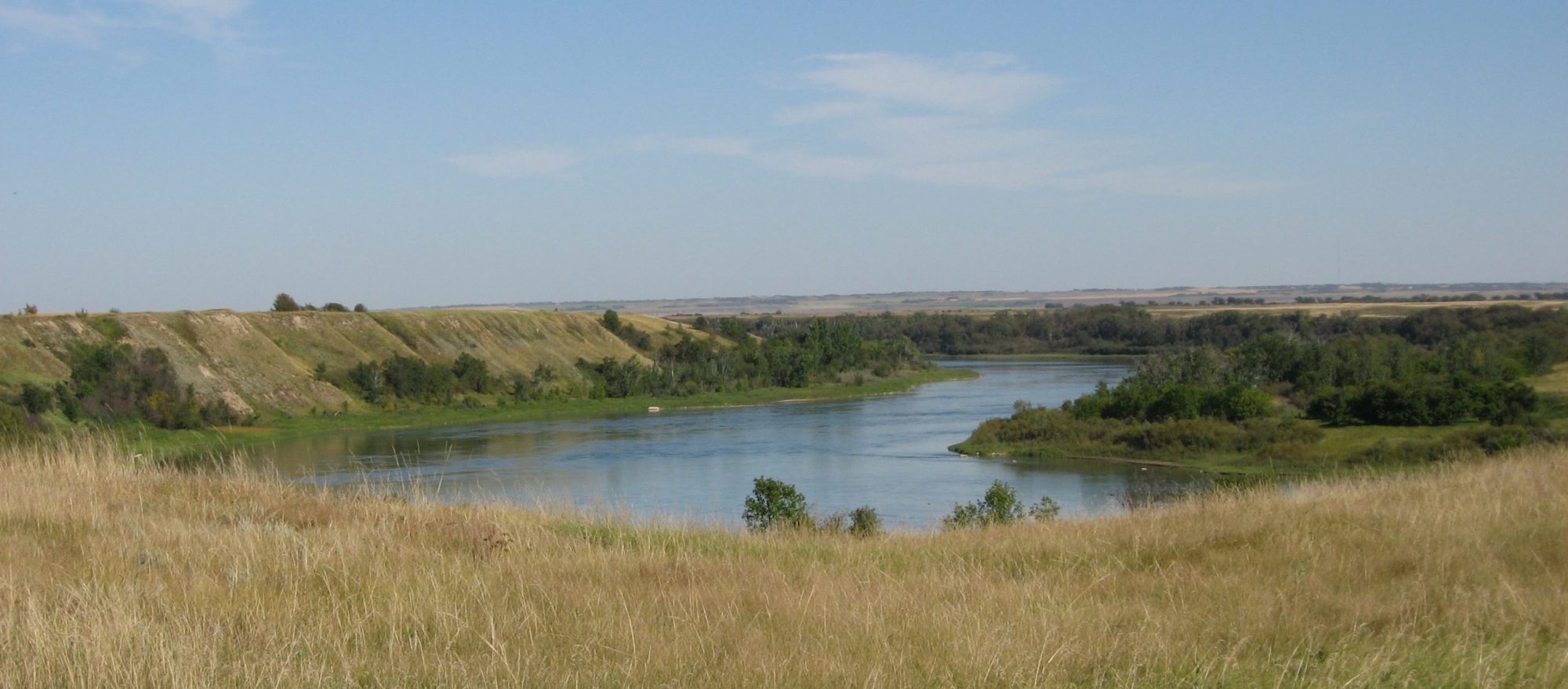
Because these events were dramatic, transformative, and spiritually intense, mountains became symbolic of epiphany, closeness to the divine, and life‑changing insight. But Prairie people like us know that you don’t have to go up a literal mountain to have such an experience.
I wonder if you can think of a time when you had a “mountaintop experience.” It probably didn’t include any supernatural elements like shining clouds or ethereal voices. But I expect that each of us has probably had a few, rare, elevated moments in life when everything feels clearer, lighter, or more meaningful – as if you’ve climbed above your usual worries and can suddenly see farther.
I remember one in the moments after I was baptized as a teenager. I didn’t literally see the Holy Spirit coming down on me like a dove, but I think I heard her and felt her in the voices of my church choir singing the Aaronic blessing over me with such sincerity and love.
Perhaps you remember a “mountaintop experience” when you looked into the face of your child for the first time, or when you realized you had found the person you were going to spend your life with, or when you accomplished something great and had a sense that you were fulfilling your calling, or when you accompanied a parent or a friend as they were dying, or when you were surrounded by people you loved celebrating life and good relationships, or when you were here with your church family lighting candles on Christmas Eve and knowing deep in your heart that Christ is the Light of the World who has come to us in love and grace.
There is a detail in the Gospel story that you probably won’t have noticed, unless, like our faithful Wednesday Bible study members, you looked back to the chapter before today’s story to see what was happening just before the disciples’ strange and wonderful mountaintop experience.
In chapter 16, Jesus checks in with his closest followers to see what they are thinking about him and his ministry. He asks them, “Who do people say that I am?” And you may remember that they reply that some people think Jesus is John the Baptist, or Elijah, or one of the other prophets come back from the dead. People clearly think that Jesus is someone special, but they haven’t quite realized HOW special – that he is actually the Messiah of God.
Then Jesus asks the disciples, “But who do you say that I am?” Surely, the close friends of Jesus who have been travelling with him, and learning from him, and participating in his work of healing must understand who he is. And Peter replies: “You are the Messiah, the Son of the living God,” following which Jesus blesses him and promises him a special authority and responsibility in the community of disciples to come.
But as soon as Jesus finishes the blessing, he goes on to tell them about what’s going to happen next. He speaks to them about the fact that he’s going to go to Jerusalem where he will undergo great suffering, and be killed, and on the third day be raised.
And as quickly as Peter had professed his faith, he now objects to what Jesus is saying. “This must never happen to you! God, forbid it!” Peter exclaims. And with that, Jesus knows that even Peter still doesn’t really understand who he is and what he is going to do for them and for the world.
I can’t help but think that maybe that’s why Jesus took Peter, James, and John up the mountain six days later. Because the leaders of his little band of followers would need that powerful mountaintop experience to bolster their faith and their courage in the coming days.
They wouldn’t get to stay on the mountaintop for long, dwelling in the glory of Jesus’ shining face and wondering at the presence of the ancient prophets. Peter would suggest setting up some tents for them to stay awhile, but the lights would soon fade, and it would be time to come back down to the ground level.
They would need to remember that mountaintop experience to help them through what was going to happen in the valley. It wasn’t going to be easy to be Jesus’ disciples in the coming days as he was arrested, tortured, and killed on a cross.
But if they could hold on to that vision, to that assurance, and to those most important words from God, “Listen to him!” then perhaps they could endure until that next mountaintop experience when they saw him risen from the dead and knew without a doubt that God is goodness, and love, and life, and that God wins over evil, and hatred and death.
I don’t know if this moment in your life feels like a mountaintop or a deep, dark valley, or somewhere in between. But as I think about the time we are living in within the world, I am aware that there are lots of discouraging things happening that threaten to undermine our faith and our hope for the future.
In addition to the political strife and corruption around the world that have become a regular part of the news cycle, this week Canadians are grieving the mass murder of six children and two adults in Tumbler Ridge B.C. We can hardly imagine the terrible pain being felt by their families, friends, classmates, and neighbours. Nor can we fathom the brokenness, anger, or despair that could have led to such an act being done.
As I thought about mountaintop experiences this week, I wondered about the people of Tumbler Ridge. It is a mining town that sits in the foothills of the Rocky Mountains, in a striking and varied landscape shaped by mountains, forests, rivers, and ancient geology.
I would guess that most of the people living there have gone hiking in the foothills and travelled up to even higher elevations to marvel at the views and the wonders of the Creation. And I hope that they’ve had other mountaintop experiences as well – times when they had a powerful sense of God’s presence and love for them, times when they were amazed by God’s glory and assured of God’s faithfulness and care for them. If not, I pray that there are others coming alongside them who will walk with them through this dark valley and carry them through with the gift of their faith and love.
On this Transfiguration Sunday, let’s give thanks for our mountaintop experiences, let’s commit to journey together through all the landscapes in which we find ourselves, and let’s hold on to our hope that God’s love and power is greater than all the hate and violence of the world. Jesus is raised, and we will be raised, and in the end, love wins.