Deuteronomy 8:7-18
2 Corinthians 9:6-15
“Thanksgiving Message”
Introduction to the Reading (Deuteronomy)
Our first Bible reading this morning comes from the Book of Deuteronomy in the Old Testament. You will remember how Moses led the Israelites out of slavery in Egypt, across the sea, and through the wilderness. The journey lasted for 40 years. That’s a really long time to be wandering in the wilderness, which was a very difficult place to live. (Point to the wilderness area. Note the stones people have in their hands.)
But very soon, the Israelites are finally going to get out of the wilderness as God leads them into the Promised Land. (Point to the Thanksgiving display – the good land. Note the apples people have in their hands.)
Moses has grown old and he will die before they make it to the good land. But some of his final words to the people are these ones, where he encourages them with a vision of the good land and life that they will enjoy, while warning them not to forget what they learned in the wilderness.
As we listen to the reading and reflect on the wilderness and the good land, I invite you to hold the stone in one hand and the apple in the other.
Scripture Reading: Deuteronomy 8:7-18 (CEV)
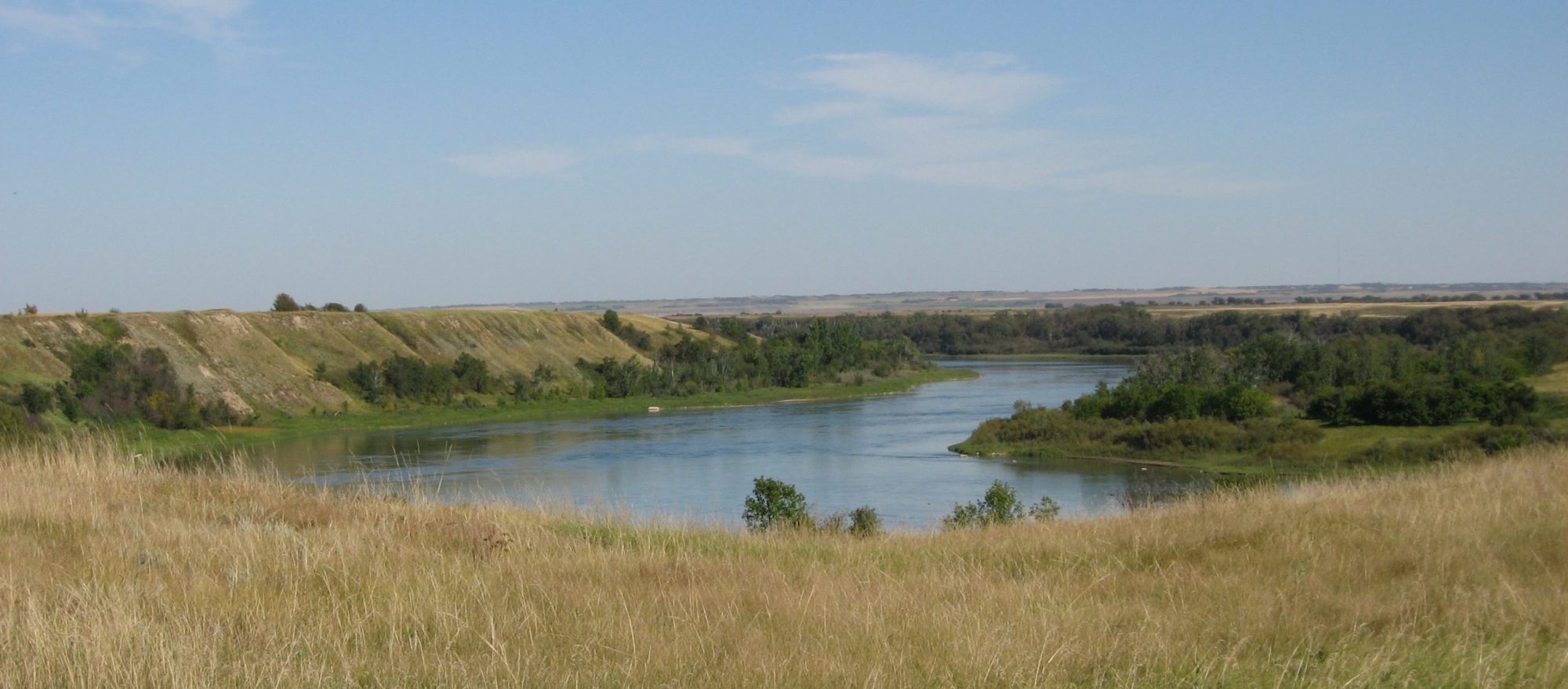
7 The Lord your God is bringing you into a good land with streams that flow from springs in the valleys and hills. 8-9 You can dig for copper in those hills, and the stones are made of iron ore. And you won’t go hungry. Wheat and barley fields are everywhere, and so are vineyards and orchards full of fig, pomegranate, and olive trees, and there is plenty of honey.
10 After you eat and are full, give praise to the Lord your God for the good land he gave you. 11 Make sure that you never forget the Lord or disobey his laws and teachings that I am giving you today. If you always obey them, 12 you will have plenty to eat, and you will build good houses to live in. 13 You will get more and more cattle, sheep, silver, gold, and other possessions.
14 But when all this happens, don’t be proud! Don’t forget that you were once slaves in Egypt and that it was the Lord who set you free. 15 Remember how he led you in that huge and frightening desert where poisonous snakes and scorpions live. There was no water, but the Lord split open a rock, and water poured out so you could drink. 16 He also gave you manna, a kind of food your ancestors had never even heard about. The Lord was testing you to make you trust him, so that later on he could be good to you.
17 When you become successful, don’t say, “I’m rich, and I’ve earned it all myself.” 18 Instead, remember that the Lord your God gives you the strength to make a living. That’s how he keeps the promise he made to your ancestors.
Reflection: The Wilderness & the Good Land
When Moses describes the Promised Land, it sounds quite wonderful, doesn’t it? The people are going to have all kinds of wonderful things that they didn’t have in the wilderness. Lots of fresh water to drink, lots of good food to eat. And they’ll even have copper and iron available to mine and to build the things they need. No more living in flimsy tents, after two generations of camping in the wilderness!
But Moses doesn’t just tell the people about all the good things to come. He also gives them a warning. What does he warn them not to do? (Wait for answers…)
Moses warns them not to forget about their time in the wilderness. Even though it was hard, God always provided what they needed. Even though they weren’t rich with money or things, their lives were blessed with God’s presence, God’s teaching in the 10 Commandments, and the ways God was showing them how to live in love with each other and with God-self.
Moses is worried that once the people have plenty of resources and stability that they will forget about God. They’ll start to think that they don’t need God anymore. Maybe they’ll think that they got all these things for themselves because of their own great power.
I think that sometimes we have that problem too. We all live in a time and place where we have so much abundance. In our Bible study this week, some of our members remembered returning from much more impoverished parts of the world and going into a Canadian grocery store. The sheer volume and variety of the produce was almost overwhelming! Others could remember the rationing system during World War II when so many essentials were in short supply.
And I’m sure that many here today can remember a time in your life when buying groceries was a struggle due to low wages, unemployment, or other challenges. Indeed, some of us may be experiencing that struggle even now, as prices continue to rise and rise.
Wilderness times come and go in our lives, whether it’s a lack of resources, a serious illness, an experience of loss, or an inability to find joy and purpose in life. Moses reminds the Israelites, and I want to invite us to remember as well, that God is present with us through those times. God provides for our needs and teaches us to trust and to rely on God’s faithfulness rather than our own strength and ability.
And when the good times come, whether we are experiencing stability or even abundance today, or hoping that it will come soon… Moses encourages us not to forget the wilderness times. Then, as we enjoy the good things in life, we do not get puffed up with pride, but instead we are filled with gratitude for God’s goodness to us.
So I want to invite you to reflect on your own life – on your own experiences of wilderness and the good land. We’ll take some quiet time for reflection on two questions:
What hard or stretching experience has shaped your faith?
What blessing or abundance has God given you?
After you have spent some time thinking about these questions, you’re invited to take your stone, remembering your wilderness times, and to place it in the wilderness area here.
Then you can take your apple, giving thanks for your blessings, and place it in the good land area here. (Music plays as people reflect and place their stones and apples.
Introduction to the Reading (2 Corinthians)
Our second Bible reading today comes from the New Testament, part of the Apostle Paul’s second letter to the Christians in Corinth. Compared to some of the other early Christian churches in the 1st century, the Corinthian congregation was doing pretty well. They lived in a big, thriving, multi-cultural city, and likely many of their members were people with significant resources.
You might say that these were the kind of people that would have benefited from Moses’ message to us today. When you have an abundance of riches, don’t think that you did it all yourself. Remember that it all comes from God, be thankful, and do one more important thing.
Let’s listen to the reading together, and then perhaps you can tell me what Paul is asking the Corinthian Christians to do when they have an abundance of riches?
Scripture Reading: 2 Corinthians 9:6-15 (CEV)
6 Remember this saying, “A few seeds make a small harvest, but a lot of seeds make a big harvest.”
7 Each of you must make up your own mind about how much to give. But don’t feel sorry that you must give and don’t feel you are forced to give. God loves people who love to give. 8 God can bless you with everything you need, and you will always have more than enough to do all kinds of good things for others. 9 The Scriptures say, “God freely gives his gifts to the poor, and always does right.”
10 God gives seed to farmers and provides everyone with food. He will increase what you have, so you can give even more to those in need. 11 You will be blessed in every way, and you will be able to keep on being generous. Then many people will thank God when we deliver your gift.
12 What you are doing is much more than a service that supplies God’s people with what they need. It is something that will make many others thank God. 13 The way in which you have proved yourselves by this service will bring honor and praise to God. You believed the message about Christ, and you obeyed it by sharing generously with God’s people and with everyone else. 14 Now they are praying for you and want to see you, because God used you to bless them so very much. 15 Thank God for his gift that is too wonderful for words!
Reflection: Thanks & Giving
What was the important thing that Paul asked the Corinthian Christians to do when they have an abundance of riches? (To give to others, to share, to be generous.)
In this text, in particular, Paul is asking them to support another Christian church (the community in Jerusalem) that is struggling a lot. There were many orphans and widows in that community, and the church needed help from their neighbours. I think of it like “Presbyterians Sharing” where we don’t just think about our own congregation’s needs, but the needs of others too.
In other words, when we think about the abundance that we have, we don’t just remember that we once struggled and try to not to take it for granted. We don’t just give thanks to God for blessing us today. But we are invited to give generously to others who have needs.
There’s one translation of this text that says, “You will be enriched in every way for your great generosity, which will produce thanksgiving to God…” Your giving will supply the needs others and “overflow with many thanksgivings to God.”
Isn’t that a wonderful thing to think about? When I give thanks to God for the blessings in my life, and I combine that with generous giving to others, my gifts produce even more thanksgiving as others receive them and thank God for them.
Our generosity and sharing is not just about the money we give in our offerings, but it’s about everything we do with our hands to give, to share, to work, to create, to help, and to serve.
So, I want to invite you to hold out your hands.
What work do these hands do?
Maybe you are using your hands in cooking, caregiving, teaching, repairing, volunteering, creating, donating, encouraging, serving, or something else that I haven’t thought of.
How has God empowered these hands to share generously with others?
How can these hands bless others today and in the days to come?
Continue to hold out your hands, as I say a prayer of blessing over all our hands:
Prayer of Blessing our Hands
Holy and gracious God,
you have made these hands — small and large, young and old —
to be signs of your love in the world.
We thank you for all they can do:
for helping, creating, cooking, fixing, comforting,
for writing, building, sharing, and serving.
Bless the work of our hands.
Bless what we offer today,
and bless what we will do in the week ahead.
May these hands sow kindness,
may they lift up those who are hurting,
may they give generously,
and may they reflect the love of Christ in every action, big or small.
Strengthen our hands when they are tired,
steady them when they are unsure,
and guide them towards what is good and life‑giving.
Holy Spirit, fill our hands with your grace
so that whatever we do may bring blessing to others
and thanksgiving to you. Amen.